
Golf is one of the few sports where nature is not a backdrop but an active participant. Every round is shaped by wind, temperature, humidity, and sunlight. Understanding how weather affects your game can be the difference between frustration and flow. At a well-designed Hackettstown Golf Course, golfers experience how science and environment work together to create better play. By exploring the relationship between weather and performance, players can learn how to adapt, sharpen skills, and enjoy more consistent results on the course.
Golf is not only about swing mechanics or equipment. It is also about awareness. Golf Science NJ continues to show that weather conditions influence ball flight, turf interaction, and even mental focus. When players understand these elements, they can Improve Golf Performance regardless of changing conditions.
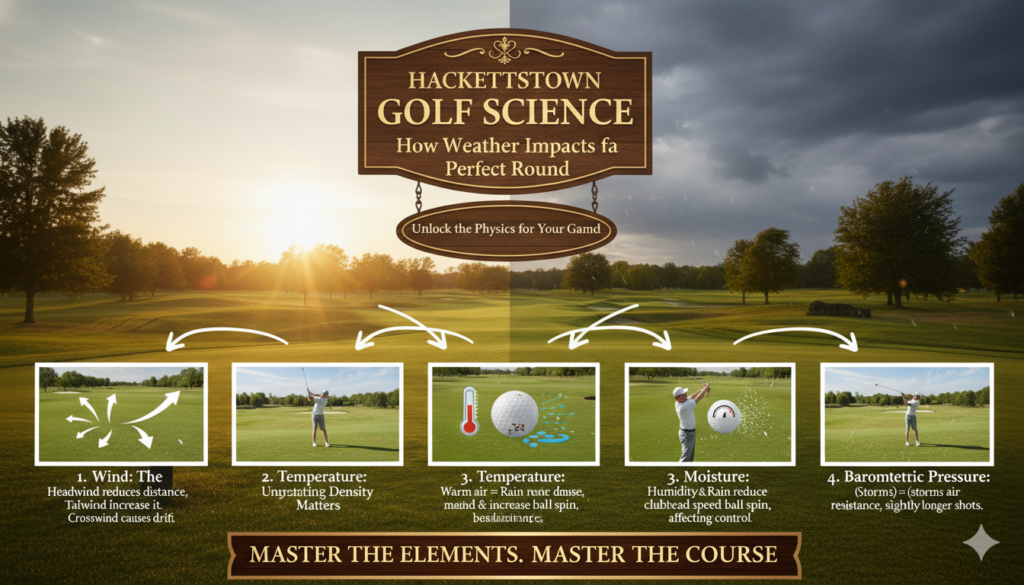
The Role of Weather in Modern Golf Science
Weather has always influenced golf, but modern research explains why these effects occur. Golf Science NJ studies how air density, ground firmness, and environmental variables affect every shot. At a high-quality Hackettstown Golf Course, these factors are carefully managed to ensure fair and predictable play.
Temperature, moisture, and wind all impact the physics of the golf ball. Warm air allows the ball to travel farther, while cooler air increases resistance. Humidity changes how the ball compresses at impact. These scientific realities highlight why golfers should think beyond technique and consider conditions before every swing.
By understanding these principles, players gain a competitive edge and Improve Golf Performance through smarter decision-making.
Temperature and Its Effect on Distance and Control
Temperature is one of the most noticeable weather factors on any Hackettstown Golf Course. On warmer days, the ball travels farther because the air is less dense. Cold air is heavier and creates more drag, reducing carry distance.
Golf Science NJ explains that for every ten-degree drop in temperature, golfers may lose several yards on their shots. This means club selection must change with the seasons. A golfer who understands this can Improve Golf Performance by adjusting expectations instead of forcing power into the swing.
Temperature also affects the golf ball itself. Cold conditions make balls less elastic, reducing compression and energy transfer. On a thoughtfully maintained Hackettstown Golf Course, these changes are predictable, allowing players to adapt rather than guess.
Wind Patterns and Strategic Shot Planning
Wind is often considered the most challenging weather variable in golf. It influences not only distance but also trajectory and spin. A consistent Hackettstown Golf Course offers natural layouts that teach players how to work with the wind rather than fight it.
Golf Science NJ shows that headwinds increase lift but reduce forward momentum, while tailwinds flatten ball flight and add roll. Crosswinds exaggerate side spin, making shot shaping more important. Understanding these dynamics helps players Improve Golf Performance through smarter shot planning.
Golfers who read the wind correctly choose safer targets, adjust ball position, and control tempo. Over time, these habits lead to lower scores and more confidence.
Humidity and Air Density in Golf Performance
Humidity is often misunderstood. Many golfers believe humid air is heavier, but science tells a different story. Golf Science NJ explains that humid air is actually lighter than dry air because water vapor weighs less than oxygen and nitrogen.
At a Hackettstown Golf Course, higher humidity can allow the ball to travel slightly farther. While the difference may be subtle, skilled players notice the effect over a full round. Recognizing these conditions allows golfers to Improve Golf Performance by fine-tuning club selection and swing intensity.
Humidity also affects grip and comfort. Moist conditions require better grip management and focus, reinforcing the connection between physical preparation and environmental awareness.
Rainfall and Turf Interaction
Rain changes how the course plays from tee to green. A well-designed Hackettstown Golf Course manages drainage carefully, ensuring fair lies and consistent greens even after rainfall.
Golf Science NJ highlights how wet turf reduces roll and increases stopping power on approach shots. Drives may carry the same distance but stop quickly, changing scoring strategies. Golfers who understand this can Improve Golf Performance by playing for carry rather than roll.
Rain also affects bunker conditions and green speeds. Players who adapt their putting stroke and approach angles gain an advantage over those who rely on routine alone.
Sunlight, Visibility, and Mental Focus
Sunlight plays a subtle but important role in golf. Bright conditions improve visibility and depth perception, while overcast skies flatten visual contrast. At a scenic Hackettstown Golf Course, changing light conditions challenge focus and alignment.
Golf Science NJ studies show that visual clarity affects confidence and decision-making. Shadows on greens can alter perception of slope, while glare impacts shot alignment. Golfers who recognize these effects Improve Golf Performance by slowing down routines and trusting fundamentals.
Mental adaptability is as important as physical skill. Weather teaches patience, awareness, and resilience, all essential traits for consistent play.
Seasonal Changes and Course Setup
Every season brings unique challenges and opportunities. Spring offers softer turf and slower greens. Summer provides faster conditions and longer distances. Fall introduces cooler air and changing winds. A premium Hackettstown Golf Course adjusts maintenance practices to preserve playability throughout the year.
Golf Science NJ emphasizes that seasonal adaptation is key to long-term improvement. Players who track how conditions change over time Improve Golf Performance by developing versatile skills rather than relying on one style of play.
Seasonal golf also strengthens strategic thinking, as each round demands new solutions.
Equipment Choices Based on Weather Conditions
Equipment decisions should reflect environmental conditions. Golf Science NJ recommends adjusting ball type, shaft flexibility, and even grip material depending on weather.
At a Hackettstown Golf Course, players often experiment with lower-compression balls in cooler weather and higher-spin options in windy conditions. These small changes help Improve Golf Performance without altering swing mechanics.
Understanding how equipment responds to weather empowers golfers to play smarter and reduce unnecessary adjustments.
Course Design and Environmental Balance
The layout of a Hackettstown Golf Course influences how weather impacts play. Natural elevation changes, tree placement, and water features shape wind flow and microclimates.
Golf Science NJ recognizes that thoughtful design enhances both challenge and fairness. Courses that work with the land provide consistent conditions while still rewarding creativity and skill.
Players who study course design Improve Golf Performance by anticipating how weather interacts with each hole.
Training Smarter Through Weather Awareness
Weather should be viewed as a training partner rather than an obstacle. Practicing in varied conditions builds adaptability and confidence. A respected Hackettstown Golf Course offers opportunities to experience diverse scenarios within a single season.
Golf Science NJ encourages players to practice intentionally during different weather patterns. Learning how shots behave in wind or rain helps Improve Golf Performance when conditions are less than perfect.
This approach transforms challenges into learning moments.
Mental Resilience and Weather Challenges
Golf is as mental as it is physical. Weather tests patience, focus, and emotional control. Players who remain calm and adaptable outperform those who resist conditions.
At a Hackettstown Golf Course, golfers learn that acceptance leads to better decisions. Golf Science NJ links mental resilience directly to scoring consistency. Players who embrace conditions Improve Golf Performance by staying present and committed to each shot.
Mental strength grows with experience, especially when weather demands flexibility.
Why Understanding Weather Elevates the Golf Experience
Golf becomes richer when players understand the science behind it. Weather awareness deepens appreciation for the game and the environment. A Hackettstown Golf Course provides the ideal setting for this connection between nature and sport.
Golf Science NJ continues to reveal how small adjustments lead to meaningful improvements. When players apply this knowledge, they Improve Golf Performance while enjoying the game on a deeper level.
Golf is not about perfect conditions. It is about mastering the conditions you are given.
Playing Smarter at a Premier Hackettstown Golf Course
A well-maintained Hackettstown Golf Course offers consistency, beauty, and challenge in every season. By understanding how weather affects play, golfers unlock new levels of strategy and confidence.
Golf Science NJ shows that knowledge is as powerful as practice. Players who learn to adapt Improve Golf Performance and enjoy the game regardless of conditions.
Weather will always shape golf. Those who respect it, study it, and adapt to it will always play better.
FAQ: Understanding Weather and Golf Performance
1. How does weather affect golf performance?
Weather factors like temperature, humidity, wind, and sunlight directly impact golf performance. These conditions influence ball flight, turf interaction, and even mental focus. Understanding weather patterns can help golfers make smarter decisions and improve their game.
2. What is the best weather for golfing?
Mild temperatures with light wind and low humidity provide the best conditions for golfing. However, golfers must be adaptable and adjust their strategies to succeed in various weather conditions.
3. How does wind affect golf shots and strategy?
Wind can dramatically change the trajectory, spin, and distance of golf shots. Headwinds reduce forward momentum, while tailwinds add roll. Crosswinds can alter shot shaping, requiring golfers to adjust their strategy accordingly for better control.
4. What effect does temperature have on golf ball distance?
In warmer conditions, the golf ball travels farther due to less air density, while cooler temperatures reduce the ball’s carry distance. Knowing how to adjust club selection based on temperature is key for accurate shot planning.